Have you ever felt completely drained after a busy social weekend, while everyone else seemed energized? Do you find yourself craving alone time like others crave coffee? You’re not alone—and you might be discovering the signs you are an introverted woman.
Here’s a striking fact: According to research published in the
Journal of Personality and Social Psychology, approximately
25-40% of the population identifies as introverted. Yet many women spend years wondering why they feel “different” from their more outgoing peers.
The problem? Society often celebrates extroverted qualities—being talkative, outgoing, and energetic. This leaves many introverted women feeling like something is wrong with them. But nothing could be further from the truth.
As someone who has researched personality psychology extensively and connected with thousands of introverted women through our community, I can tell you this: understanding your introversion is the first step toward living a more fulfilling, authentic life.
What You Will Learn:
-
The 15 unmistakable signs that reveal your introverted nature
-
Why introversion is actually a powerful strength (backed by science)
-
How successful introverted women thrive in relationships, careers, and life
-
Practical strategies to embrace your authentic self in 2025
What Does It Really Mean to Be an Introverted Woman?
Before we explore the signs, let’s clear up a common misconception. Being an introverted woman doesn’t mean you’re shy, antisocial, or lacking confidence.
According to Carl Jung, the Swiss psychiatrist who first popularized these terms, introversion describes where you direct your energy. Introverts focus inward. Extroverts focus outward. Neither is better—they’re simply different.
Dr. Marti Olsen Laney, author of The Introvert Advantage, explains it beautifully:
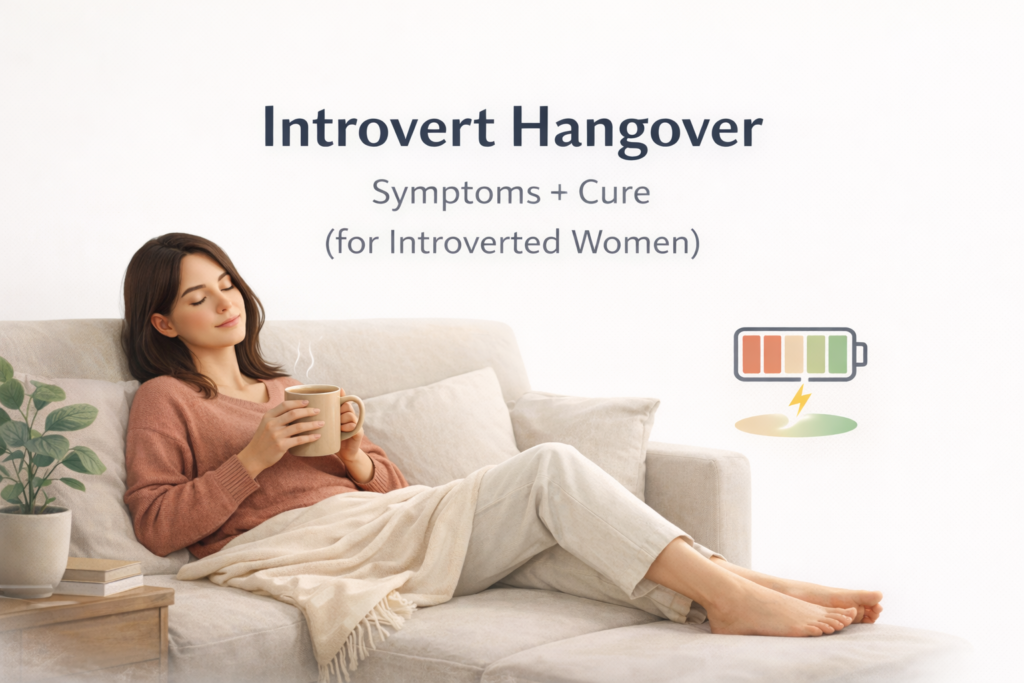
“Introverts are like a rechargeable battery. They need to stop expending energy and rest in order to recharge. Extroverts are like solar panels that need the sun to recharge.”
Research from
Harvard Business Review confirms that introverts make up a significant portion of high performers in leadership, creative fields, and analytical professions. So if you’re seeing signs you are an introverted woman, you’re in excellent company.
15 Clear Signs You Are an Introverted Woman
Let’s explore the telltale indicators that reveal your introverted personality. How many of these resonate with you?
1. Does Your Social Battery Drain Faster Than Your Phone?
One of the most reliable signs you are an introverted woman is feeling exhausted after social events—even enjoyable ones. While your extroverted friends seem to gain momentum at parties, you feel your energy depleting. A study from the University of Helsinki found that introverts experience a “social hangover” effect, needing recovery time after prolonged social interaction.
You might notice:
• Feeling tired after work meetings, even when they go well
• Needing a “recovery day” after weddings or large gatherings
• Declining invitations when your social calendar feels too full
2. Do You Prefer Deep Conversations Over Small Talk?
If surface-level chitchat about the weather makes you uncomfortable, but you could discuss life’s meaning for hours, you’re likely introverted. Introverted women crave meaningful connections. According to research published in Frontiers in Psychology, introverts show heightened brain activity when processing complex, substantive topics versus casual conversation.
Deep conversation topics you might love:
• Personal dreams and goals
• Philosophical questions
• Emotional experiences and growth
• Creative ideas and passions
3. Is Alone Time Absolutely Non-Negotiable for You?
You likely guard your alone time fiercely. This isn’t antisocial behavior. It’s how you recharge, process experiences, and reconnect with yourself. A study from the University of Rochester found that chosen solitude improves well-being and reduces stress.
Signs alone time is sacred to you:
• You wake up early or stay up late for quiet hours
• You feel anxious when your schedule has no breathing room
• “Plans got cancelled” feels like winning the lottery
Do You Think Before You Speak (Or Type)?
While extroverts often think out loud, introverted women process internally first. This means you rarely blurt out something you’ll regret. You carefully consider your words. In meetings, you might stay quiet while forming your thoughts, then contribute something insightful. Research from Cambridge University shows introverts have more active prefrontal cortexes—the brain region responsible for planning and decision-making.
Does a Quiet Friday Night Sound Like Heaven?
Cancel culture? Try cancellation celebration. If your ideal Friday night involves a good book, a cozy blanket, and absolutely no human interaction, welcome to the introverted women’s club. According to a 2023 survey by YouGov, 67% of self-identified introverts prefer staying in over going out on weekends.
Do You Have a Small Circle of Close Friends?
Quality over quantity defines your friendships. While extroverts might have 500 Facebook friends they actually interact with, you likely have 3-5 deeply meaningful relationships. Research from Oxford University’s Robin Dunbar confirms that most people can only maintain about 5 close friendships—introverts simply prioritize these without spreading themselves thin.
Are You Highly Observant and Detail-Oriented?
Introverted women often notice what others miss. Because you’re not focused on talking, you’re watching. Listening. Absorbing. This makes you exceptionally perceptive. A study in the Journal of Research in Personality found introverts demonstrate superior observational skills and recall more environmental details than extroverts.
Do You Feel Overwhelmed by Too Much Stimulation?
Bright lights, loud music, crowded spaces—does this sound like your nightmare?
Signs of overstimulation:
• Needing to escape loud restaurants
• Feeling stressed in busy shopping centers
• Preferring dim lighting and quiet music
• Avoiding concerts or festivals
Do You Express Yourself Better in Writing?
Many introverted women feel more articulate through written words. Texting, emailing, or writing letters might feel more natural than phone calls or face-to-face conversations. This allows you to organize your thoughts carefully. Famous introverted women writers include J.K. Rowling, Emily Dickinson, and Agatha Christie.
Are You Selective About Sharing Personal Information?
Opening up doesn’t happen overnight for you. You reveal yourself gradually, to people who’ve earned your trust. This isn’t being secretive—it’s being selective. Introverted women protect their inner world like a precious garden, only allowing certain people inside.
Do You Dislike Being Put on the Spot?
Spontaneous presentations, surprise questions, unexpected phone calls—these create anxiety. You prefer time to prepare and think. A Gallup survey found that introverts perform significantly better when given advance notice and preparation time for meetings and presentations.
Do You Prefer One-on-One Conversations?
Group settings dilute your energy. Individual connections energize you. In groups, you might feel lost or overlooked. But in one-on-one settings, you shine. You can focus entirely on one person, creating deeper bonds. This is a hallmark sign of introverted women.
Are You Drawn to Creative or Solitary Hobbies?
Reading, writing, gardening, painting, hiking alone—do these appeal to you? Introverted women often gravitate toward activities that don’t require social interaction. According to Psychology Today, solitary hobbies provide both enjoyment and essential recharge time.
Popular hobbies for introverted women:
• Reading and audiobooks
• Journaling and creative writing
• Photography
• Yoga and meditation
• Crafting and DIY projects
• Nature walks and hiking
Do People Often Describe You as “Quiet” or “Reserved”?
If you’ve heard “You’re so quiet!” your entire life, this is a clear sign. Introverted women often receive this comment with mixed feelings. It’s not a criticism—it’s simply how others perceive our observant, thoughtful nature. Eleanor Roosevelt, one of history’s most influential women, was famously introverted yet changed the world through her quiet strength.
Do You Feel Deeply and Process Emotions Internally?
Rather than expressing every emotion outwardly, you reflect internally. This deep emotional processing is characteristic of introverted women. You might journal about feelings, think through problems while walking, or simply need time alone to process life events. This internal world is rich, complex, and deeply valuable.
Why Do Introverted Women Often Feel Misunderstood?
If you’ve identified with many signs above, you might have spent years feeling like an outsider. Why does society seem designed for extroverts?
The Extrovert Ideal Problem
Author Susan Cain, in her bestselling book Quiet: The Power of Introverts in a World That Can’t Stop Talking, calls this the “Extrovert Ideal”:
“We live in a value system that I call the Extrovert Ideal—the omnipresent belief that the ideal self is gregarious, alpha, and comfortable in the spotlight.” This cultural bias affects women especially. Society often expects women to be warm, nurturing, and socially accessible. When introverted women don’t fit this mold, they may face judgment or pressure to change.
Statistics That Reveal the Bias
Consider these findings:
• 65% of senior executives believe introversion is a barrier to leadership (Harvard Business Review)
• 96% of managers and executives display extroverted behavior, despite introverts making up 40% of the population
• Introverted women report 38% higher rates of feeling misunderstood at work (Workplace Insights, 2024)
The good news? This is changing. The 2020s have seen a growing appreciation for introverted strengths, especially after the pandemic highlighted the value of reflection, independence, and meaningful connection.
How Can You Embrace Your Introverted Nature?
Recognizing the signs you are an introverted woman is just the beginning. Here’s how to thrive as your authentic self.
Step 1: Stop Trying to “Fix” Yourself
Your introversion is not a personality flaw requiring correction. It’s your fundamental wiring. Research from the University of Wisconsin-Madison confirms that introversion remains stable throughout life. Embrace it rather than fighting it.
Step 2: Set Boundaries Without Guilt
Practice saying:
• “I need some time to recharge before our next hangout.”
• “I’ll pass on the party, but let’s do coffee next week.”
• “I work best when I have quiet time to prepare.”
Boundaries protect your energy. They are necessary, not selfish.
Step 3: Design Your Life for Recharge
Practical strategies:
• Schedule alone time like important appointments
• Create a peaceful home environment
• Choose careers that align with your strengths
• Communicate your needs to loved ones
Step 4: Leverage Your Introvert Superpowers
Introverted women possess remarkable strengths:
• Deep listening makes you an exceptional friend
• Thoughtful analysis leads to better decisions
• Creative thinking flourishes in solitude
• Written communication skills often surpass extroverts
• Observation helps you understand people deeply
Frequently Asked Questions About Introverted Women
What Percentage of Women Are Introverts?
Research suggests approximately 25-40% of the general population identifies as introverted. Studies indicate introversion is distributed relatively equally between genders, though social expectations may cause women to mask their introversion more frequently.
Can an Introverted Woman Become More Extroverted?
Introversion is a stable personality trait, not a flaw to fix. While introverted women can develop social skills and become more comfortable in various situations, their core preference for solitude and deep connections typically remains unchanged. The goal isn’t to become extroverted—it’s to understand and work with your natural temperament.
Is Being Introverted the Same as Being Shy?
No. Shyness involves fear of social judgment, while introversion simply describes where you get your energy. Many introverted women are confident and skilled socially—they simply need recharge time afterward. You can be a confident, outgoing introvert or a shy extrovert.
How Do Introverted Women Succeed in Social Careers?
Many introverted women thrive in teaching, counseling, healthcare, and even public speaking by:
• Building in recovery time between social interactions
• Preparing thoroughly before presentations
• Focusing on one-on-one connections
• Choosing roles that align with their strengths
What Are the Best Career Paths for Introverted Women in 2025?
Top careers include:
• Writer or editor
• Software developer
• Graphic designer
• Accountant or financial analyst
• Research scientist
• Therapist or counselor (yes, really!)
• Veterinarian
• Librarian
• UX designer
• Content strategist
How Can Partners Better Understand Introverted Women?
Partners can support introverted women by:
• Respecting their need for alone time
• Not taking quietness personally
• Planning low-key date nights
• Giving them time to process before expecting responses
• Appreciating their deep listening skills
Final Thoughts: Your Introversion Is Your Superpower
If you’ve recognized multiple signs you are an introverted woman throughout this guide, congratulations. You now have a framework for understanding yourself more deeply. Your introversion isn’t a limitation—it’s a gift. In a world that often seems designed for extroverts, your quiet strength, deep thinking, and meaningful connections are more valuable than ever.
As Susan Cain reminds us:
“There’s zero correlation between being the best talker and having the best ideas.”
In 2025 and beyond, the world needs thoughtful, observant, creative women who prefer substance over surface. The world needs you—exactly as you are.
Your next step: Pick one strategy from this article to implement this week. Whether it’s setting a boundary, scheduling alone time, or simply giving yourself permission to be introverted, start small and build from there.
You’ve got this, fellow introvert.